
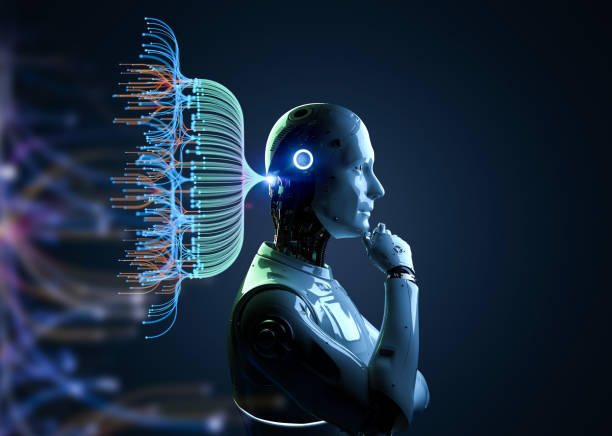

 machine learning allows computers to learn from experience and become more intelligent without explicit programming.)
Introduction:-
Artificial intelligence (AI) machine learning allows computers to learn from experience and become more intelligent without explicit programming. Fundamentally, machine learning algorithms allow systems to automatically pick up new skills and adjust to changing conditions by recognizing patterns in data and using that knowledge to generate judgments or forecasts. Machines are now capable of doing complicated activities that were previously limited to human intelligence thanks to their capacity to learn from data.
Algorithms that process vast volumes of data and derive significant insights are the foundation of machine learning. These algorithms fall into three general categories: reinforcement learning, unsupervised learning, and supervised learning. In supervised learning, the algorithm is trained on input-output pairs to predict results for new data, using labeled data as the source of learning.
Unsupervised learning entails identifying structures and patterns in unlabeled data, whereas reinforcement learning is concerned with teaching algorithms how to maximize rewards by iteratively making judgments. There are many uses for machine learning in a wide range of sectors and fields. Machine learning models are used in healthcare to predict patient outcomes, diagnose illnesses from medical pictures, and customize therapy regimens. Algorithms in finance use financial data analysis to spot fraud, forecast market movements, and enhance investment plans. Machine learning is used to power applications like speech recognition, language translation, and image recognition in domains like computer vision and natural language processing.
The availability of enormous volumes of data, increases in processing power, and advancements in algorithm development are what drive machine learning forward.
Deep learning, a branch of machine learning that draws inspiration from the anatomy and physiology of the human brain, has transformed fields such as voice and picture recognition. These developments have a huge impact on companies, research, and daily life as they continue to push the limits of what machines are capable of.
Ethical issues are becoming more crucial as machine learning technologies advance and become more widely used. Consideration must be given carefully to issues like algorithmic bias, data privacy, and the effects of automation on society. In order to maximize machine learning systems’ potential for good social effect while reducing associated dangers, it is imperative that fairness, openness, and accountability be upheld throughout the development and implementation process.
Summary:-
To sum up, machine learning is a potent instrument in the realm of artificial intelligence that allows computers to understand, adjust, and carry out activities on your own using data. Machine learning will probably find more uses as it develops further, providing fresh chances for creativity and tackling challenging problems in a range of industries. Accepting and using machine learning technologies responsibly can result in revolutionary breakthroughs that will influence technology in the future and improve human capabilities in ways never seen before.