
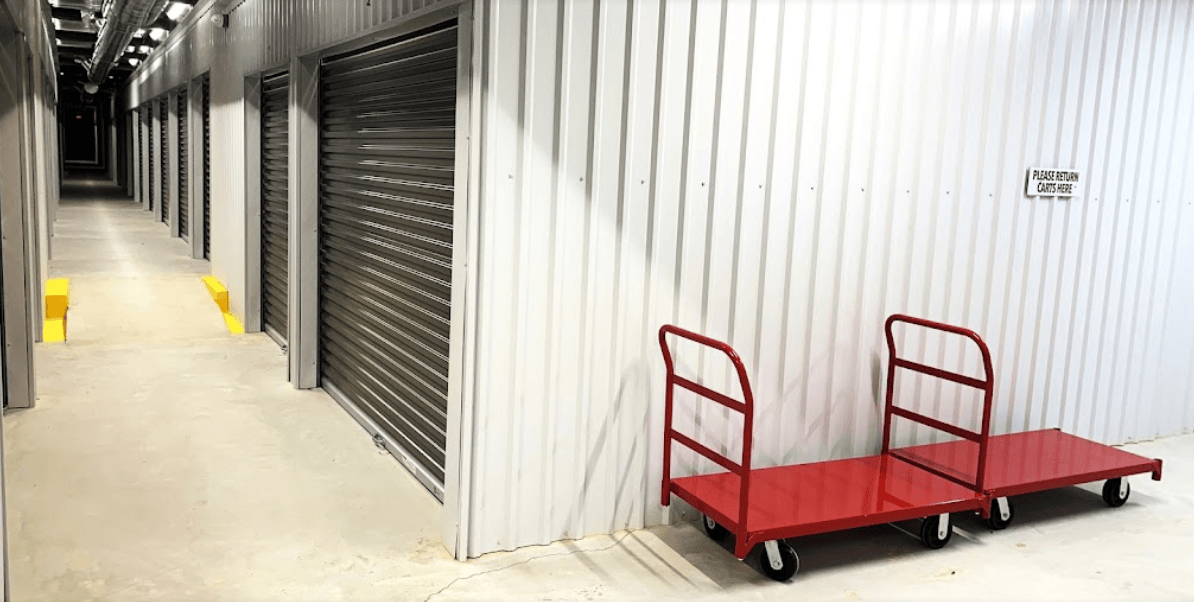


Floor measurements reveal only part of a storage unit’s available space. Renters who estimate cubic capacity can compare unit sizes more accurately. A clear volume estimate shows whether furniture, boxes, equipment, and access space will fit comfortably.
Start With the Unit’s Full Interior Dimensions
Cubic capacity is found by multiplying the unit’s interior length, width, and height. A space measuring 10 feet long, 10 feet wide, and 8 feet high provides 800 cubic feet before walkways, shelves, and door clearance are considered. Inside measurements are more useful than advertised dimensions because posts, sloped ceilings, and door mechanisms may reduce usable room.
Request exact measurements from the facility rather than assuming all storage units have identical proportions. Two rentals with the same square footage may offer different capacities if their ceiling heights vary. People searching for storage units near me should also ask whether safety equipment or features restrict how high belongings may be stacked.
Calculate the Volume of Large Household Items
Furniture and appliances can be treated as rectangular shapes. Multiply the length, width, and height of sofas, dressers, cabinets, tables, refrigerators, and boxed mattresses. Converting all measurements to feet before multiplying keeps the totals consistent.
Bulky pieces rarely fill every inch of the rectangle around them, so this method provides an estimate rather than a perfect packing total. Disassembled bed frames, removable table legs, stacked chairs, and empty cabinet interiors can reduce the space required.
Group Boxes by Size for Faster Math
Matching cartons make volume calculations easier because one measurement can represent an entire group. Measure one box, calculate its cubic volume, and multiply the result by the number of boxes with the same dimensions. Separate mixed containers into small, medium, and large groups instead of relying on a single rough average.
Plastic totes need a separate estimate because raised lids, tapered sides, and handles affect how neatly they stack. Rounded containers leave gaps that basic volume formulas cannot show. Sorting containers by size also helps renters plan stable rows and keep fragile or frequently used items within reach.
Allow Extra Room for Gaps and Odd Shapes
Perfect packing rarely happens inside real storage units. Bicycle frames, furniture arms, lamps, tools, and curved decorations create open pockets between belongings. Adding roughly 10 to 20 percent to the item total can account for these gaps, although unusually shaped loads may require a larger allowance.
Certain possessions also need separation to prevent damage. Upholstered pieces benefit from covers and breathing room, glass panels should not carry weight, and appliances need upright placement. Climate controlled storage may reduce exposure to major temperature and humidity swings, but careful spacing and stable packing remain necessary.
Subtract Space for Access and Door Clearance
Usable capacity decreases when renters need an aisle through the unit. A narrow walking path, open space near the entrance, and enough room to remove boxes can take up a noticeable part of the total volume. Ignoring access space often creates a tightly packed unit that becomes difficult to use.
Door operation must remain clear, particularly around roll-up tracks or inward-swinging panels. Shelving also occupies floor space even though it improves vertical organization. A practical estimate should reflect how often belongings will be retrieved, not only how much could fit under ideal conditions.
Consider Weight Before Using the Full Height
Cubic footage does not show whether a tall stack will remain safe. Books, tools, records, and dense equipment may fit by volume while overloading cartons, shelves, or furniture below them. Heavy items belong near the floor, while lighter and less fragile belongings can occupy higher levels.
Weak boxes may collapse long before the ceiling height is fully used. Uneven towers can shift, and mattresses or upholstered pieces should not support concentrated loads. Strong shelving and matching containers help renters use vertical room without creating unstable piles.
Match the Final Estimate to a Unit Size
Add the volume of all belongings, include an allowance for irregular gaps, and reserve space for movement. Comparing that adjusted total with the unit’s interior capacity gives a more useful answer than square footage alone. Renters should leave additional room if they expect to store more items later. That margin also leaves room for protective wrapping materials.
Storage Partner helps customers compare storage units by size, features, and intended use, including climate controlled storage options. Available spaces can support household moves, seasonal belongings, business inventory, and long-term organization. A well-planned cubic estimate makes it easier to choose enough capacity without paying for unnecessary space.