

Most people have probably encountered epoxy resin without even knowing it. It’s in the shiny finish on industrial floors, the glue that holds parts together in airplanes, the wind turbine blades sprawling across open terrain, and even the shiny artistic tables that have been popping up on social media feeds of late. Epoxy resin is one of those materials that quietly gets woven into modern life, doing its job behind the scenes but rarely garnering much attention outside of industrial circles.
The epoxy resin market is interesting, as its influence is really wide. It’s not a niche material for one industry. It is central to construction, automotive manufacturing, electronics, renewable energy, aerospace, marine applications and countless consumer products. For some it’s a creative DIY project; for engineers it’s an important high performance material that supports infrastructure and advanced manufacturing.
The market has been changing steadily, as industries continue to demand materials that are durable, lightweight, chemically resistant and adaptable. That’s why demand remains high even as manufacturing trends change worldwide: epoxy resin checks many of those boxes.
Why is Epoxy Resin so Valuable?
Epoxy resin is a polymer at its core, with powerful adhesive properties and exceptional resistance to heat, chemicals and mechanical stress. When cured or hardened it forms a rigid and very durable material that can survive demanding environments.
It’s this mix of strength and versatility that makes epoxy resin so useful across such disparate industries. It is used in construction to strengthen structures and to protect surfaces. It is used as an insulating material in electronics. It aids in developing lightweight composite materials for aerospace and automotive manufacturing, enhancing fuel efficiency without sacrificing strength.
One of the reasons industries rely heavily on epoxy resin is its long-term performance. Materials that are exposed to moisture, corrosion or extreme temperatures can deteriorate over time but epoxy-based systems tend to do quite well. Reliability is of great concern to engineers and manufacturers, particularly in terms of safety and durability.
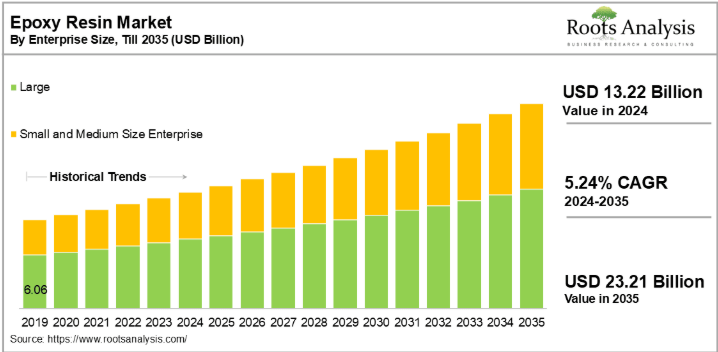
I just learned about Roots Analysis and they said that “The epoxy resin market size is expected to reach $13.22 billion by 2024 and $23.21 billion by 2035, growing at a CAGR of 5.24% during the forecast period 2024-2035.” That projection demonstrates the consistent increase of epoxy resin in traditional industries as well as emerging technologies.
Interestingly, the material has also made it into mainstream consumer culture. People who have never worked in industrial manufacturing now know epoxy resin from furniture design, jewelry making and decorative coatings that are widely shared online.
Growth Driven by Construction and Infrastructure
One of the biggest industries driving the epoxy resin market is construction. Modern infrastructure projects require materials that can withstand heavy usage, weathering, and a long life in operation. Epoxy based coatings and adhesives are commonly used because they provide good protection against wear and corrosion.
A good example is industrial flooring. Epoxy coated floors are used in warehouses, factories, hospitals and commercial facilities because they are durable, easy to clean and resistant to chemicals. Anyone who has walked across a polished warehouse floor has probably seen epoxy resin at work without giving it a second thought.
Epoxy materials are also used in bridges, pipelines and water treatment systems for corrosion protection. Costly to maintain infrastructure, industries prefer materials that lower repair costs over the long term. Demand is also rising with urbanization and industrial development in emerging economies. With the development of the cities and the manufacturing infrastructure, the demand for durable construction material is obviously growing. A contractor once told me that epoxy coatings are “insurance for concrete,” and that really feels like a good way to explain what they do.
Renewable Energy Brings New Opportunities
The renewable energy sector, especially wind energy, has become a growing sector for epoxy resin manufacturers. Wind turbine blades are often manufactured using epoxy resin based composites, as they need to be lightweight yet able to withstand extreme environmental stress over many years. Turbine blades are getting longer and more efficient, meaning they need advanced materials that can balance flexibility and strength effectively.
As countries invest more heavily in renewable energy infrastructure, the demand for these materials rises. A lot of people outside of the manufacturing world don’t immediately see the link between growth in clean energy and growth in specialty materials.
Different electrical and protective uses of solar energy systems also employ epoxy based components. The wider shift to cleaner energy technologies indirectly benefits growth in the resin market in a few ways. And the car makers are contributing, too. With electric vehicles increasingly utilizing lightweight composite materials to enhance efficiency and battery performance, Epoxy resin is an important component in many of these advanced material systems.
This is one reason why the market feels surprisingly future oriented despite epoxy resin being a mature industrial material. It keeps up with technology so it doesn’t get obsolete .
Electronics and High Performance Manufacturing
Insulation, protection and durability are provided by materials that modern electronic systems rely on heavily. Epoxy resin does all three well. Epoxy materials are often used in circuit boards, semiconductors, transformers and electronic encapsulation systems because they are resistant to moisture, heat and electrical interference. As consumer electronics become more advanced and smaller, the need for reliable protective materials becomes more apparent.
Epoxy based composites are also widely used in aerospace industry. Aircraft makers like to use light materials because saving weight adds up to lots of fuel savings over time. Epoxy composites are a means to reach that balance of strength and weight reduction. Marine applications are another important segment. Boats, ships and offshore structures are exposed to harsh environmental conditions such as humidity, temperature fluctuations and saltwater exposure. High resistance is offered by epoxy coatings and adhesives in these challenging environments.
What all these industries have in common is how much epoxy resin works behind the scenes. Although consumers may never see it with their own eyes, it silently improves the performance and durability of products that people use every day.
Challenges in the Epoxy Resin Market
The epoxy resin market is growing at a steady pace, but with challenges. Raw materials price volatility is still a major concern. The production of epoxy resin is highly dependent on inputs from the petrochemical industry and changes in the price of oil and chemicals can have a major impact on the cost of production.
Environmental issues are also gaining in importance. Conventional epoxy resin systems may contain chemicals that raise sustainability and health concerns. Regulatory pressure is growing in several regions around emissions and chemical safety. Manufacturers are developing bio-based and lower-emission alternatives, but it takes time to transition at scale. The balance between performance, cost and sustainability is still a complex challenge for the industry.
Another problem is the recycling of epoxy materials. Thermoset resins are more difficult to recycle once cured than some other plastics. Researchers are actively working on more sustainable solutions but commercial adoption is slow. Supply chain disruptions have added to the uncertainty in recent years. Specialty chemicals and industrial materials are critical to industries that are experiencing delays, increased costs and logistical headaches from the global manufacturing migration. Despite these challenges, demand continues to grow as epoxy resin is still difficult to replace in many high performance applications.
The Human Face of the Market
One of the more interesting things about the epoxy resins market is how it connects industrial manufacturing and personal creativity in unexpected ways. On one side you have engineers designing advanced industrial coatings and aerospace composites. On the other, independent artists and furniture makers are making handmade resin products that go viral online, racking up millions of views.
This crossover has rendered epoxy resin in a strangely familiar light for people who might otherwise never notice industrial materials. Thanks to social media and DIY culture, this material has reached completely new audiences.
Resin based design is also gaining an appreciation for the craftsmanship that goes into it. Epoxy has become visually recognizable, rather than purely industrial, thanks to custom river tables, decorative flooring, jewelry and art pieces. The mix of technical performance and creative flexibility gives surprisingly broad cultural presence to the market.
Conclusion
The epoxy resin market continues to grow due to the versatility, durability and adaptability of the material in numerous industries. Epoxy resin is a critical ingredient in products and systems that people use every day, often without even realizing it, from infrastructure and renewable energy to electronics and creative design.
The market’s growth is largely driven by construction, automotive manufacturing, aerospace and clean energy projects as industries are looking for lightweight, high performance materials that can withstand demanding conditions for a long time.
Sustainability, recycling and the cost of raw materials are challenges that will determine the future of the market. But manufacturers continue to invest in innovation to improve environmental performance while maintaining the attributes that make epoxy resin so valuable. The interesting thing about this market is that epoxy resin quietly occupies the intersection of industry, technology and creativity. It may not garner the same fanfare as shiny new tech, but once you start digging, it’s one of the bedrock materials underpinning modern manufacturing and infrastructure in ways you can’t miss.