
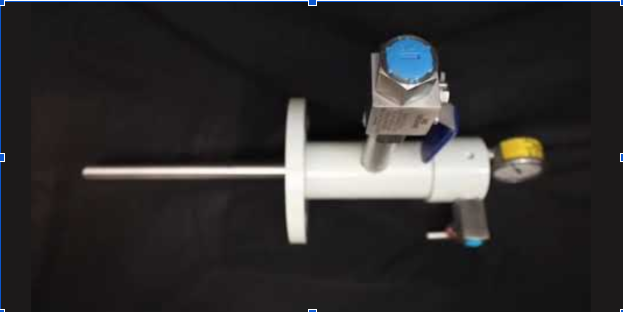


Chemical dosing in industrial process systems, whether for corrosion inhibition, scale control, pH adjustment, or biocide treatment, is only as effective as the system through which the chemical is delivered into the process stream. An industrial dosing pump that accurately meters the required chemical volume provides no process benefit if the chemical is not delivered to the right point in the flow stream and properly dispersed within it. The Chemical Injection Assembly is the interface between the dosing system and the process pipeline, and its design and specification have a direct impact on how efficiently and consistently chemical dosing achieves its intended process objective.
What a Chemical Injection Quill Assembly Comprises
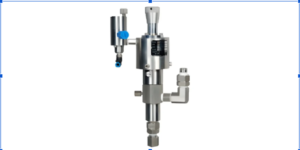
A complete chemical injection assembly typically consists of the following:
- The injection quill itself, a tube or lance extending to the centre of the process pipeline
- An isolation valve allowing the quill to be isolated without disrupting the process
- A check valve preventing backflow of process fluid into the chemical supply system
- A quill holder or compression fitting sealing the quill into the pipeline
- Connection fittings compatible with the upstream chemical injection tubing or piping
- In some designs, a retraction mechanism allowing the quill to be withdrawn under live conditions
The assembly is installed into a flanged nozzle or threaded boss on the process pipeline, positioned to deliver the chemical directly into the main flow stream rather than at the pipe wall.
Why Point of Injection Matters for Dosing Efficiency
The most common reason for poor chemical dosing performance in industrial systems is not inadequate dosing pump accuracy; industrial dosing pump provide excellent metering precision. The most common reason is inadequate mixing between the chemical and the process fluid after injection, which means that part of the pipeline cross-section receives insufficient chemical while another part may receive excess.
The chemical injection assembly addresses this by delivering the chemical to the center of the pipe, where flow velocity is highest and turbulent mixing is most effective. The combination of a well-positioned injection quill with a downstream inline static mixer ensures that chemical distribution is uniform across the full pipe cross-section within a short pipe length downstream of the injection point.
Benefits of a Properly Designed Injection Quill Assembly
Improved Chemical Utilisation
When chemical dosing is uniform across the full flow stream, the dose rate required to achieve the desired treatment level can be reduced compared with wall injection, where high localised concentration near the injection point and inadequate concentration in other areas of the cross-section forces overdosing to compensate. Reduced chemical consumption directly reduces treatment costs.
Better Protection of Downstream Equipment
An industrial dosing pump delivering corrosion inhibitor, for example, is protecting downstream pipework and equipment from corrosion. If the inhibitor is not uniformly distributed in the flow stream, some surfaces receive inadequate protection regardless of the total amount of inhibitor injected.
| Injection Method | Distribution Quality | Downstream Protection |
| Wall injection without static mixer | Poor, chemical concentrated near one pipe wall | Uneven, over-protected in some areas |
| Quill injection without static mixer | Moderate, better than wall but not uniform | Improved but still variable |
| Quill injection with inline static mixer | Excellent, uniform across cross-section | Consistent and effective |
Safer Chemical Handling at the Injection Point
A properly designed chemical injection quill assembly incorporates isolation and check valve arrangements that protect the operator during maintenance, prevent backflow of corrosive process fluid into the chemical supply system, and allow the quill to be withdrawn without depressurising the main pipeline in retractable designs.
Matching the Assembly Specification to the Application
The specification of a Chemical Injection Assembly must reflect the specific process and chemical conditions of the application:
- Quill material must be compatible with both the injected chemical and the process fluid
- Connection pressure rating must meet or exceed the maximum process pipeline pressure
- Check valve cracking pressure must be set correctly relative to the injection pressure to prevent backflow without requiring excessive pump discharge pressure
- Quill length must be calculated to extend the injection point to the pipe centreline or point of maximum velocity
For aggressive chemicals or high-temperature processes, consultation with an experienced supplier is essential to ensure that material selection and design details are correct for the service conditions.
Integration With the Wider Chemical Dosing System
The chemical injection quill assembly is one element of a broader chemical dosing system that includes the storage vessel, the industrial dosing pump, suction and discharge piping, instrumentation for flow or level measurement, and the downstream process monitoring that verifies treatment effectiveness.
All of these elements need to be considered together to ensure that the chemical dosing system performs as intended. A high-quality injection quill assembly combined with a poorly specified dosing pump, inadequate suction arrangement, or a discharge back-pressure that exceeds the pump’s maximum operating pressure will not deliver the expected results.
Conclusion
A properly designed and correctly specified Chemical Injection Assembly is one of the most cost-effective investments available for improving the efficiency and consistency of industrial chemical dosing programmes. By delivering chemicals to the optimum point in the flow stream, ensuring adequate dispersion, and protecting the dosing system from process fluid backflow, it maximises the benefit obtained from every litre of chemical injected. NND Oil & Gas designs and supplies complete chemical injection quill assemblies for oil and gas, water treatment, and industrial process applications, with application engineering support to ensure correct specification for every duty.